Books read in 2025
January 5, 2026
Happy new year. I’m actually posting my reviews in early January :)
This past year, much of my reading was inspired by my travels. Mexico, Vienna, Budapest, and South Africa (photos coming soon) shaped the book list to help me make sense of where I was. That ended up pulling me toward novels and histories about memory, power, and exile. I also read a few classics, and theories of how knowledge and our models shape the world. A few fluffy books on business leadership and strategy round out the selection. The question underneath most of them was how do our ideas about money, identity, justice, even literature itself, end up remaking the worlds they describe?
Aside from the list below, I also covered parts of Robert D. Putnam’s Bowling Alone, Howard Schilit’s Financial Shenanigans, and Phillip Roth’s American Pastoral, which will likely make it into next year’s list.
The Beginning of Infinity - David Deutsch
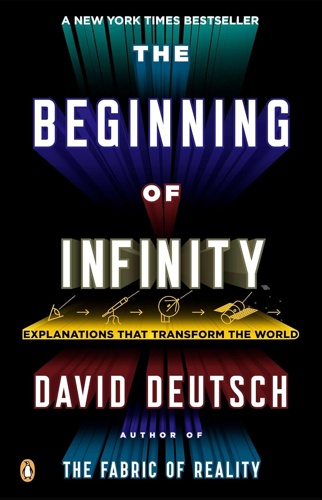
With its mix of epistemology, political theory, and physics, The Beginning of Infinity was a strong start to the year. Deutsch is an Israeli-British physicist, often called the father of quantum computing. He claims that progress comes from better explanations of reality, and from protecting the conditions that let people test, criticize, and replace bad theories. Societies that treat knowledge as something handed down by authority eventually stall; ones that embrace dissent and error-correction keep moving. Civilization is an engine for generating better ideas. Everything else follows.
He frames the Enlightenment as a turn away from authority, and postmodernism as a turn back toward it. Deutsch attacks the precautionary principle, historical determinism, and even the idea of sustainability. Avoiding change is usually more dangerous than trying new solutions, he insists. Postmodern thinking, he argues, pretends to reject authority while replacing reason with in-group rules about which stories are acceptable. Once everything is relative, criticism stops and power fills the gap. Real explanations are hard to falsify because the world pushes back; narrative games are easier because only referees’ opinions matter. What actually changes history are ideas, often a single one in someone’s head, that unlocks new ways of acting. History looks mechanical only in hindsight. In real time, it turns on imagination.
The book rambles, with detours ranging from string theory entanglement to imagined dialogues between Greek philosophers, but Deutsch’s optimism in humanity and unrelenting belief that we can solve problems by applying our knowledge make it worthwhile.
Alchemy - Rory Sutherland
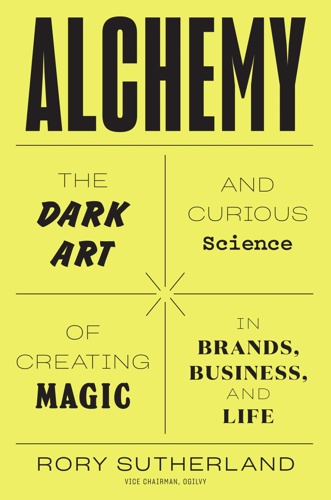
I read Rory Sutherland’s Alchemy for a book club at work. We chose it after Shreyas Doshi praised it in his Product Thinking class. Alchemy makes a big promise: most problems we treat as engineering challenges are actually about psychology, and if we stopped worshiping spreadsheets, we’d design better products and policies. It’s a fun story, but without real evidence. The book feels more like clever dinner conversation than a solid thesis. I was almost as disappointed by the book as I was by the class.
The central claim is that if you change how something is perceived you may not need to change the underlying reality at all. Outdoor tables make a café feel lively, so more people go. Add car icons to your rideshare app, and reduce perceived uncertainty even if the delay is the same. Airports make you walk farther so the wait feels shorter. Red Bull tastes medicinal, and the odd taste becomes a reason to believe it works. Value is subjective.
The problem with Alchemy is it has no framework, just stacked anecdotes to prove the author’s point. When something “irrational” works, it proves the thesis. When it doesn’t, we apparently tried the wrong irrational thing. If you actually want behavioral economics, read Thaler, or Kahneman and Tversky, but much of the field deserves skepticism. Alchemy is vibes, occasionally insightful, but intellectually pretty hollow.
Las batallas en el desierto - José Emilio Pacheco
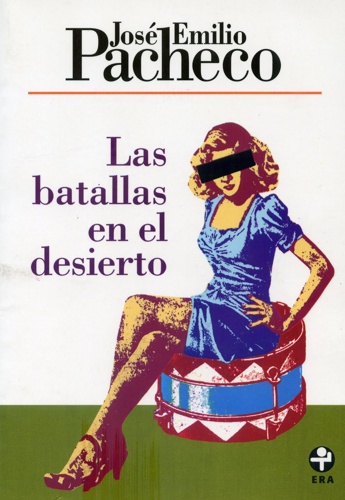
I opened Las Batallas en el Desierto in a Mexico City café while staying in La Roma last year. I try to read about the places I visit while traveling. I knew Pacheco’s short novel was about the city and its residents, but I didn’t realize how hyper-local it would be. The book is a period piece about mid-century Mexico, capturing the city’s transformation through the eyes of a child in La Roma, from provincial backwater to emerging metropolis. Page by page, more of the streets around me showed up.
Partly autobiographical, it filters Pacheco’s memories of 1940s Mexico and the people who walked its streets. The book is about identity, the changing face of Mexico City, and its migrants, both local and foreign. Unexpectedly, even though the immigrant population in the neighborhood then, Jews and Arabs, are merely background characters in the novel, it’s named after Israel’s war of independence.
On my last day there, having just finished reading it, I coincidentally stumbled into a literary tour group organized by the Mexican Ministry of Culture. I tagged along as the guide read fragments, exploring moral dilemmas and commenting on urban transformation. He read while pointing out buildings, some long gone. Pacheco’s Roma is a kind of composite, not quite the neighborhood of the ’40s and ’50s he narrates, not quite the one of the ’70s or ’80s when it was written, and definitely not the one I was staying in. It’s a ghost version of the city that only exists in memory and literature.
Pedro Páramo - Juan Rulfo
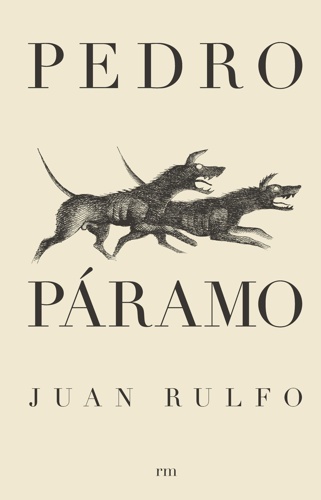
On my impromptu literary walking tour in CDMX, the guide compared Pacheco’s Roma to Márquez’s Macondo and Rulfo’s Comala. That was high praise, so I decided to read Rulfo’s Pedro Páramo, too. The book starts with a walk through a decaying rural town, disorienting you with characters that slip between life and death so seamlessly that you don’t know who’s on which side. It’s not quite horror, but definitely has a haunted feel.
Rulfo blends history with the surreal as he describes the landowner’s relation to the peasants who work their land, the rebels who start the Revolution, and the townspeople who believe in salvation even if they know it’s offered by a corrupt church. The blunt portrayals of gender, power, and class dynamics are probably the most compelling aspects of the book. The novel reminded me of Cortázar’s Casa Tomada, with its supernatural symbolism and a mix of existential dread and political allegory. The atmosphere is heavy, with characters who narrate their hallucinations, and confusing non-linear time that puts you on edge.
I tried watching the Netflix movie, but Hannah immediately fell asleep. On our second try, she made it through. It’s beautifully shot, but I’d recommend skipping it and just reading the book.
Gringo Viejo - Carlos Fuentes
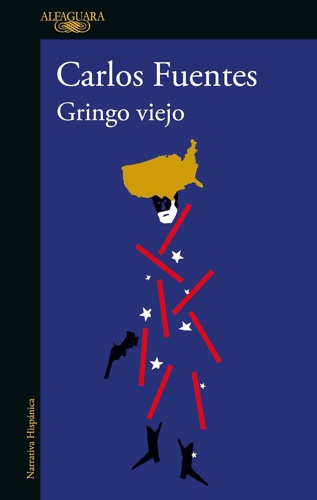
Carlos Fuentes’s Gringo Viejo was another unexpected Mexican novel pick. The book is about the liminal space between the two countries, but more importantly the borders that exist only inside people’s heads. It tells the story of a nameless guy wandering South into the Mexican Revolution, who learns that both nations and people invent simple stories about themselves and then mistake those stories for truths. Everyone in the novel thinks they know exactly who they are and what side of history they’re on. Fuentes shows how fragile that certainty is. The book kept reminding me of one of my favorite phrases, Jorge Drexler’s “yo no soy de aquí, pero tú tampoco”: nobody is truly “from” the place they think.
The connection to the Bay Area was an interesting surprise, with Hearst, Stanford, and the shadow of Californian capitalism appearing as background characters to the Revolution. I didn’t realize until afterward, reading the Wikipedia page, that the “old gringo” is meant to be Ambrose Bierce, a San Francisco writer who vanished in Mexico. It made me want to read more history.
Steppenwolf - Hermann Hesse (translated by Kurt Beals)
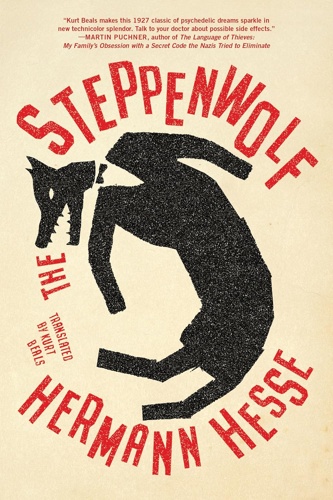
Like its contemporary Berlin Alexanderplatz, which I read last year, The Steppenwolf is a German novel about the psychological pressures of modernity. Through a book-within-a-book frame, we meet Harry Haller, a middle class cultured guy who is convinced he is unfit for modern European society. Radios, cars, newspapers, and city noise promise him connection and a better future while flattening his lived experience. Haller can’t reconcile feeling suicidal in his burgeois world of abundance.
The book pokes at how little of what we appreciate is personal or objective. Harry reveres “serious” art and mocks jazz music, but then has to confront that what he calls culture may just be what he was trained to worship, and lack of exposure to other equally valid yardsticks. It reminded me of Klosterman’s What If We’re Wrong? and its fear that our opinions are ephemeral, destined to look ridiculous later.
The surreal final scenes at the Magic Theater are instructive hallucinations, suggesting everyone around us is fighting the same fight. Not NPCs, but each of us living a complex life, being many things at once. Harry thinks he is split into two, man and wolf. The person he is, and the person he would be if he wasn’t tied up in his city self with the uneasy discontent of living a good life that is somehow unlivable. The book replies that this is an oversimplification. “Man is an onion with a hundred skins, a tissue woven of many threads.” The Shrek writers might have read Steppenwolf, and Hesse likely read Whitman’s lines about containing multitudes, too. Humans are contradictory, and our task is not to erase our contradictions, but to learn to live with them.
The Crux - Richard Rumelt
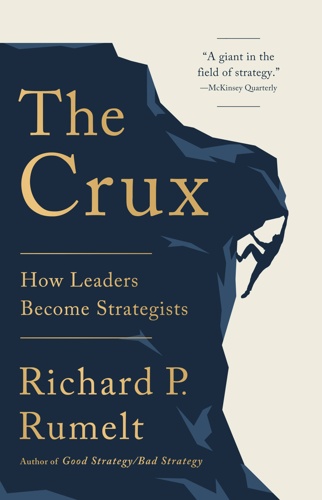
This was also a work book club read. Like most business books, the point of The Crux fits in one line: diagnose the hardest solvable challenge, commit focused action to solving it, then move on to the next problems.
For Rumelt, strategy is a “mixture of policy and action designed to surmount a crucial challenge.” Strategy must be top-down, imposed by leadership on an organization, and equivalent to saying no to all distractions. Refusing to make choices about what singular challenge to tackle, or the direction to take, are the most critical failure modes of a leader.
Rumelt skewers the standard politicking of companies big and small: metrics cosplay, acquisition theater, and design by committee. These pathologies are the private sector analog of Ezra Klein’s “everything-bagel liberalism” of government programs overloaded with contradictory goals that slow cities and countries down and turn worthy initiatives into tar pits.
The central message is to only play the games you can win. The scatter-brained, shiny-object leader gets a well-deserved beating. The best cultures reinforce a “thousand no’s for every yes.”
Les Misérables - Victor Hugo (translated by Julie Rose)
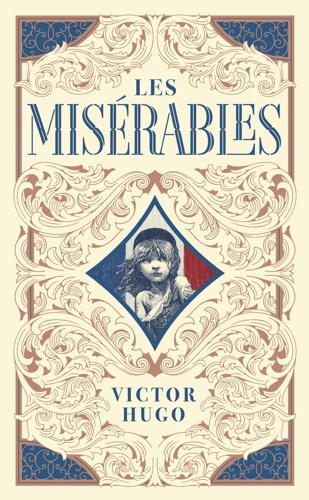
I read the unabridged Les Misérables for a Catherine Project class, and as part of my ongoing quest to read the classics. I went into Hugo’s brick cold, never having seen the musical, and still haven’t watched the movie. When I finally saw the show live, I enjoyed it, but don’t think I would have if I hadn’t read it first. The novel is epic. I ended up with 40 pages of highlights and notes, so what I can say in three paragraphs will never do it justice.
Hugo has a political stance, and the book iterates through the social problems of the era, casting light on each and making a veiled push for reforms. It is a book of stand-ins: characters who embody arguments and ideals. The Bishop is grace, Javert is law (distinct from justice), Valjean is redemption, Fantine is society’s cruelty and indifference, Cossette is innocence, and Thénardier is exploitation. Hugo doesn’t hide that he reveres some and that he has axes to grind with others.
Halfway through, Hugo mentions that his main character is “the infinite” and that man is only secondary. Even with all the religious overtones in the novel, I actually read that as Hugo making a point about contingency, not God. Time and again, Hugo marks that much of human suffering, hope, and happiness, is randomness; being in the right place at the right time, having the right person open the door or lend us a hand. The digressions on Waterloo and the 60 pages of sewer-walking are totally unnecessary, but are examples of this, too, showing how much our path depends on the context in which we develop, and how much the decisions that came before us shape our experience.
The World of Yesterday - Stefan Zweig (translated by Anthea Bell)
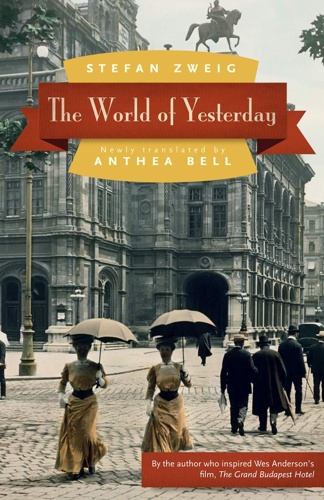
The World of Yesterday is part autobiography, and part time-lapse of the 1900 to 1940 rollercoaster. I read it as background for my family trip to Vienna and Budapest last year, and found something much richer than a history of Central Europe. While largely forgotten today, a hundred years ago Zweig was the most translated author in the world. From the first few paragraphs you can see why. Telling his family story of grandparents riding liberalism and industrialization out of an emancipated Moravian shtetl into bourgeois Vienna, he shows the unprecedented level of trust people once placed in European institutions. Their promise of progress and economic growth was almost a secular religion.
The book moves through vignettes of early twentieth century zeitgeist: the generational optimism and endless belief in progress and science swing to each World War and to the intervening collapse of the moral order. Zweig depicts life before and after, marking changing cities and shifting personalities. Dotted throughout are his intellectual and artistic circles’ reactions to world events. His breadth of experience is almost unbelievable even by 2026 standards. Zweig rubs shoulders with figures who later loom large in history and art: Herzl, Verhaeren, Rathenau, Joyce, Gorky. He’s somehow everywhere history is incubating. The European capitals and Potemkin experiences in Russia are expected. Less expected are his visit to New York City and realizing its openness to immigrants by pretending to be penniless, his shock encountering the caste system in India, or his realization in Brazil that global news now followed you everywhere (if only he knew).
A feeling of living in history, and not outside of it, permeates the book. Zweig lived through seismic changes, from hyperinflation to dispossession and exile. A tweet from Branko Milanovic rings true: Zweig’s writing lands heavy today because we too are at the end of one type of world and at the beginning of another. I truly enjoyed it, and in preparing this short note I realized how much it resonated. Through upheaval, the human impulse to live life doesn’t stop. All in all, an outstanding book.
An Engine, Not A Camera - Donald MacKenzie
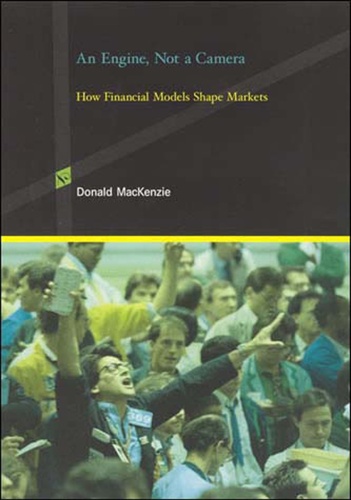
An Engine, Not a Camera was my favorite of the year. I had learned many of the finance models it discusses in college, but not the history behind them. In telling their backstory, MacKenzie shows that the existence of theory shapes the markets it intends to describe. The book’s core idea is “performativity:” when enough people use a model to make decisions, the world begins acting as if the model were true. Engines are active. They change the systems they touch. In that reading, financial theory is less a camera recording reality and more an engine that pulls reality toward it. For example, if everyone prices options with the same formula and hedges with the same tools, reality bends toward that common spreadsheet, even if the original models were wrong upfront. The tidy abstractions of risk neutrality, efficient markets, and rational arbitrage become self-fulfilling in a similar way.
Though it is pretty technical, what makes the book special is its human focus. The story is mediated by relationships. MacKenzie traces ideas cascading from Markowitz to Sharpe, to Modigliani and Miller to Treynor, and Black and Scholes to Merton. Each of those also follow into institutions, old and new. As finance became “science-shaped,” universities turned business schools into research centers, and that academic aura helped models jump to Wall Street and be accepted by regulators. The math is mostly in the appendices; the narrative is about people reading each other, arguing, collaborating, and competing for prestige and money.
Reading pre-‘08 finance books is often fraught, but there’s no pretense that these models are perfect. The book includes the engines misfiring, too. MacKenzie gives a framework for thinking about feedback loops, fragility, and unintended consequences, pulling from the crises of 1987 and the LTCM collapse. If anything, his argument points towards markets not being efficient.
Calling finance “objective” often hides value judgments. Regulation, software, and trading desks embed assumptions, and those assumptions become social facts. Whose risk matters, whose losses are tolerable, and whose gains are rewarded is implicit in the models and the institutions that enforce them. MacKenzie writes as a sociologist, not a finance professor, and that angle made it feel fresh. I’d happily read a 2025 version.
If on a Winter's night a traveler - Italo Calvino (translated by William Weaver)
If on a winter’s night a traveler is a modern thriller about books: reading, writing, translating and mistranslating them. The novel alternates between chapters narrated to “you,” the Reader, and the opening chapters of ten unfinished and seemingly unrelated novels. The main story, told in second-person, follows “you” chasing manuscripts, falling for another reader, and stumbling into a literary conspiracy. Each fragment leaks back into the main narrative as the novel becomes recursive and self-referential. The whole thing is confusing, and a little unhinged.
Calvino plays with authorship, forgery, and censorship, portraying the book publishing industry as a force manufacturing and distributing meaning. Ultimately, though, he points out that history changes books, and as readers so do we. Heraclitus said we never step in the same river twice; Calvino suggests we can never read the same book twice, either. On a reread, you’re not the same reader, and though the words stay still, the world around them shifts. Layers of memory, context, and self accumulate in time, refracting the author’s intent into something new. Calvino invites us to think about literature as motion, a conversation between what’s on the page and whoever we are when we meet it.
Paula - Isabel Allende

Isabel Allende’s Paula is a triptych memoir. The first panel recounts her childhood growing up in Chile, with mysterious family origin stories and memories full of the magical realism of omens and coincidences. Another unfolds suspended time in a sterile hospital, writing to her daughter, Paula, who lies in a coma and sharing the impossible wish to trade places with her. The third confronts the violence of Chile’s 1973 coup, her exile, and the long, painful work of starting over.
The hospital passages echoed my own experience keeping vigil during a family crisis: distorted time, a sense that everything is standing still, hopeful reactions to the tiniest signs of improvement, and the joy of getting them out of the hospital paired with the slow realization that they would not get better. Reading about Paula’s illness was painful, but I can’t imagine how much more painful it must be when it’s a parent and not a son doing the caregiving.
With Paula my thoughts often drifted to my aunts, too, women of Allende’s generation who are themselves devoted Allende readers. I could see the power of representation at work.
After her family’s exile, the book turns surprisingly positive. Allende describes her move to Caracas and her eventual move to the United States as reinventions. Despite all the grief and self-doubt, she writes with an overwhelming optimism about her displacement. She insists that new lives are built on prior ones’ shaky foundations. Seemingly endless resilience carry the novel, and Allende, forward.
The Memory Police - Yoko Ogawa (translated by Stephen Snyder)

Yoko Ogawa’s The Memory Police starts with a striking premise but never quite becomes compelling. Life on an unnamed island is incrementally stripped of random objects and the memories attached to them. Characters accept each disappearance with resignation as the plot drifts. The book gestures at big themes of authoritarianism, trauma, and cultural amnesia, but the stakes feel abstract without ever explaining what drives the disappearances, or who leads the Memory Police agents. The atmosphere is intentionally muted and thin, with a worldbuilding so incomplete that I couldn’t enjoy the novel.
What struck me was Ogawa’s idea that when people forget how to use things, the things themselves change. It echoes Calvino’s work mentioned above. Books still exist, but when people forget how to read they become inert boxes, literal paperweights. This example is particularly sad, given decaying reading comprehension rates mean we’re on our way there. Meaning requires memory, and without it, culture collapses into artifacts no one can activate.
The Most Important Thing - Howard Marks
Howard Marks’ The Most Important Thing aims to be a pragmatic book about risk and investor behavior through the lens of value investing. I read it skeptically. Public market value investing has always looked like speculation to me, so I picked it up hoping Marks would change my mind or at least show how people commit to this approach more seriously. I had read some of his Oaktree memos and expected careful writing grounded in experience. I wasn’t looking for recipes or magic formulas, but I was still surprised by how little felt actionable.
Everything sounds reasonable: Buy from forced sellers, remember that price creates risk, avoid strikeouts. None of this is wrong, but it isn’t rocket science either. The book presents itself as intellectually humble, ultimately relying on the key assumption that you must know more than the person on the other side of the trade. I still don’t see a clear methodology for value investing without a scaffold to create information asymmetry, so remain convinced that for most people, owning the market cheaply, staying diversified, and resisting the urge to be clever is a better call than looking for bargains. In the end, someone like Marks is on the other side of your trades.
July's People - Nadine Gordimer
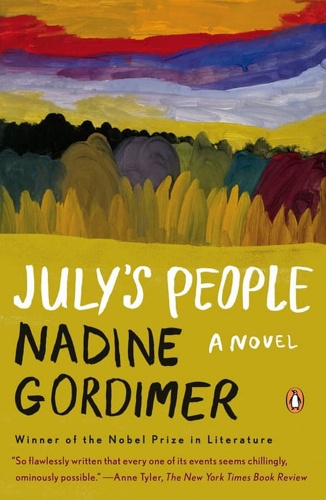
I read July’s People during our South Africa honeymoon. Gordimer wrote it in 1981, imagining a near-future civil war toppling apartheid. A white liberal family flees the city with their Black servant, July, to hide in his rural village. The Smales see themselves as “good” whites, but the value of that self-image collapses when their comfort and control vanish. It doesn’t change how the villagers see them. The wordplay is clever: to the Smales, it’s the villagers who are July’s People, but to the villagers, it’s the Smales who are July’s People. The story is political, and personal.
July helps them survive out of kindness, but expects repayment that they can’t provide. Their dependence on July starts to hurt, and that leads to a role inversion that neither of them is prepared for. Their old toys and household leftovers show up in July’s home as his family’s prized objects. Items he’d stolen from them show up, too. No matter how well they treated July, painful truths bubble up and their relationship strains. July isn’t a villain or savior, and even in his village he reports to someone else. From my short time in South Africa, the tensions Gordimer wrote about still seem close to the surface.
Reminiscences of a Stock Operator - Edwin Lefèvre
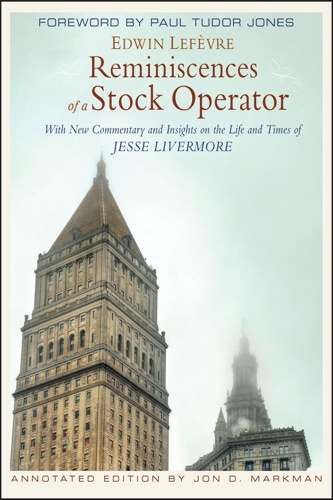
I listened to Reminiscences of a Stock Operator as an audiobook, curious as to how an investing classic from over a century ago could still be relevant. The main character, a thinly-veiled Jesse Livermore, trades through bucket shops as a kid and eventually levels up to real brokers who know him by name and reputation. The most interesting part was the depiction of markets where mechanics were still human-scale. The nudges back then were not default choices on a form or sleek UX tricks and animations, but face to face interactions with clerks and pieces of paper crossing over a counter.
The infrastructure is different, but the psychology feels uncomfortably current. Our markets are algorithmic, faster, and vastly more complex, but the book is a reminder that the real operating system behind them is still human nature. We’re still hopeful and fearful, convinced that this time it’s different and usually wrong at the worst possible moment.
Disgrace - J.M. Coetzee
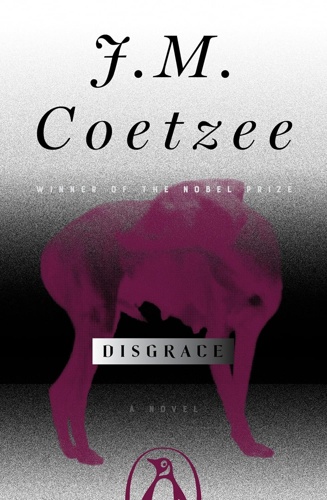
I read Disgrace after Hannah grabbed it in South Africa, and it’s a tough, dark book. Coetzee opens with a city professor who thinks he can live inside his own narrative. After overstepping with a student, he ends up disgraced and pushed out to his daughter’s small farm, where the incentives are different and the stakes are physical. The rural world doesn’t care about his credentials nor the notion of justice he respects. It cares about power and community. The professor turns to taking care of animals in search of something like penance and catharsis, and realizes he can’t undo his mistakes.
The farm’s neighbor, Petrus, is a chilling transactional figure. On the surface, he is polite and competent, but ultimately cold and pragmatic, setting a trap and playing the city-folk to their demise. He offers protection, but only on his terms, with many strings attached, and with a clear statement of who is weak and who is strong. The professor and his daughter have no option but to adapt as Petrus acts on this power asymmetry. In Coetzee’s world, there is no clean justice and no reset button, just rolling with the punches.
Crime and Punishment - Fyodor Dostoevsky (translated by David McDuff)
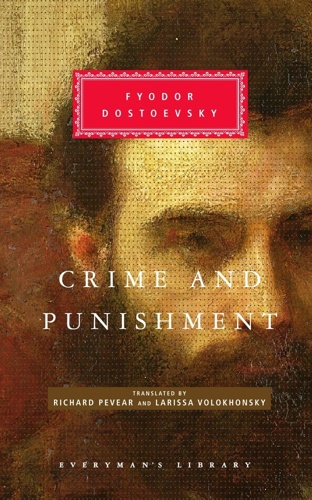
I read Crime and Punishment for a Catherine Project class, too, expecting a life-changing “greatest novels ever written” experience. I liked it, but it didn’t quite land at that level. It was my first time reading Dostoevsky, and I felt the seams in its serialized structure. Like Les Misérables, many characters double as arguments: utilitarian calculus, nihilism, Christian suffering, liberal rationalizing.
Spoiler: Raskolnikov, the protagonist, is a poor ex-law student who plans to kill a pawnbroker. He convinces himself the money will free him and his family so he can perform deeds like “extraordinary men” do. After the murder, he unravels as guilt crowds out his rationalization. He’s evil and inconsiderate, and yet you root for him. This setup, where you side with the bad guy feels familiar: The Sopranos and Breaking Bad ran the same trick as if it were new. We sit inside Raskolnikov’s head, wanting him to get away with it, and then have to live with the discomfort of realizing what that says about us.
I liked the city texture, too. St. Petersburg comes across as anonymizing and hectic. Its tenements and markets expose people to others, and unmoor them; they find themselves capable of things they wouldn’t do back home. The warm treatment of life in Siberia as a restart at the end surprised me. Dostoevsky had just returned from a decade of exile there. He paints it as punishment, but also a painful form of hope.
Katalin Street - Magda Szabó (translated by Len Rix)

I picked up Katalin Street on my trip to Budapest, knowing very little about the mid-century Hungarian experience. On its surface, it’s a novel about life during fascism in the bluntest way: set on the eponymous street, the Jewish neighbors are kicked out of their home and (spoiler) murdered. But the book isn’t really about that. Szabó’s focus is domestic life before and after the tragedy next door. School, friendships, gossip, petty rivalries between siblings, parents staging pageants in their living room while history tightens and shapes the kids’ lives.
The novel follows those children into adulthood as they fall short of the futures everyone once imagined. The adults shift too, as their status and titles of high-ranking soldier, talented doctor, or beloved teacher, crumble when the ground moves. Throughout, family dynamics and expectation mismatches carry more weight than the macro backdrop. There’s also a faint metaphysical theme, which felt unnecessary, where past and present coexist, and the dead interact with the living anchored by their urban environment. Katalin Street asks what we owe one another, and how that sense of responsibility thins out when ordinary people drift with the current. We don’t always become who we thought we were going to be.
Complete Family Wealth - James E. Hughes Jr., Susan E. Massenzio, Keith Whitaker
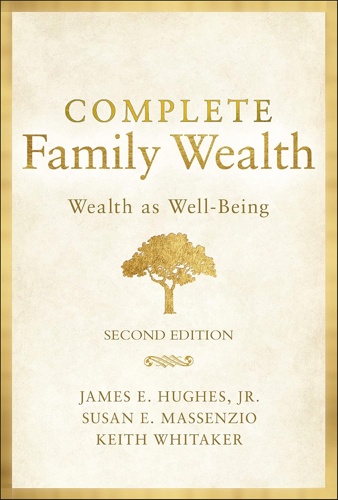
I decided to read Complete Family Wealth after seeing it recommended across a bunch of forums while exploring an idea in the private-wealth space. The core thesis echoed what I heard in user interviews: as balance sheets grow, the value of advisors shifts away from spreadsheets and tax tricks toward the human side. Advisors literally become therapists, referees, and sometimes family historians. Money is just a pretext that elicits the conversations.
Unfortunately, the book is a slog. I’m glad I read it for context, but if you’re curious about family wealth there must be far better places to start. Even by business-book standards, the writing is clumsy and rambling, padded with fuzzy, self-helpy philosophy. It is comically lacking in self-awareness, too, especially when discussing the emotional hardships of inheriting or giving away enormous sums. There are a few useful ideas, like the distinction between gifts and transfers, and some basic governance concepts, but they arrive wrapped in platitudes.
Unconventional Success - David Swensen
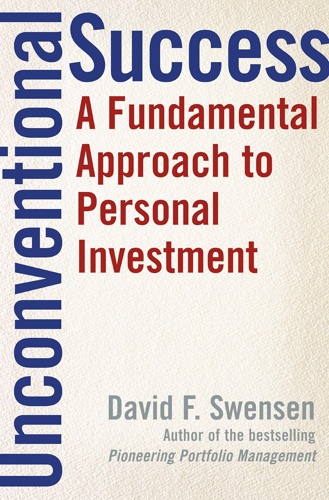
I first heard of David Swensen in a Kellogg finance class, where his Yale endowment run made him the patron saint of real-world portfolio theory. Unconventional Success is him turning that theory into a retail-friendly rant. The advice is straightforward: asset allocation dominates, so keep an equity bias, rebalance systematically to trim winners and bolster losers, and don’t pay for market-timing.
The finance industry is engineered to harvest fees from retail investors, not to compound their wealth. The book is an autopsy on incentives. He pummels active managers and the mutual-fund machine. Swensen shows that active management is on average market-minus-costs, with taxable shareholders eating the turnover. He’s also blunt about alternatives: they demand access, patience, and governance most individuals don’t have; things have changed a bit since then (hello, AngelList), but you’re still often buying opacity at a premium. I enjoyed the plumbing details more than expected: reconstitution arbitrage on Russell indices, stale pricing, 12b-1 fees, and soft dollars muddying mutual funds returns. Even the ETF redemption mechanics issues were fun to learn about.
Swensen wrote this over 20 years ago, and most of it holds. Amid 2025’s bubble discourse, his boring punchline still stands: hold the market. Only two of the Mag 7 beat the S&P 500 in 2025. I’d love an updated take covering new SEC rulings, ZIRP, the rise of robo-advisors, and the role of crypto and other alts leaking into retail portfolios. We live in Swensen’s world, where passive assets represent over half the market.
And that’s a wrap. You can find my lists from previous years here: 2024, 2023, 2022, 2021, 2020, 2019, 2018, 2017, and 2016. What I’m reading next as well as recommendations are over here.
Thanks to Hannah Doherty for her feedback on early drafts of this post.
Photo: The Gym, by Hannah. Previously posted in H1 ‘25 Variety Pack.